Meeting Her Where She Is Back to list
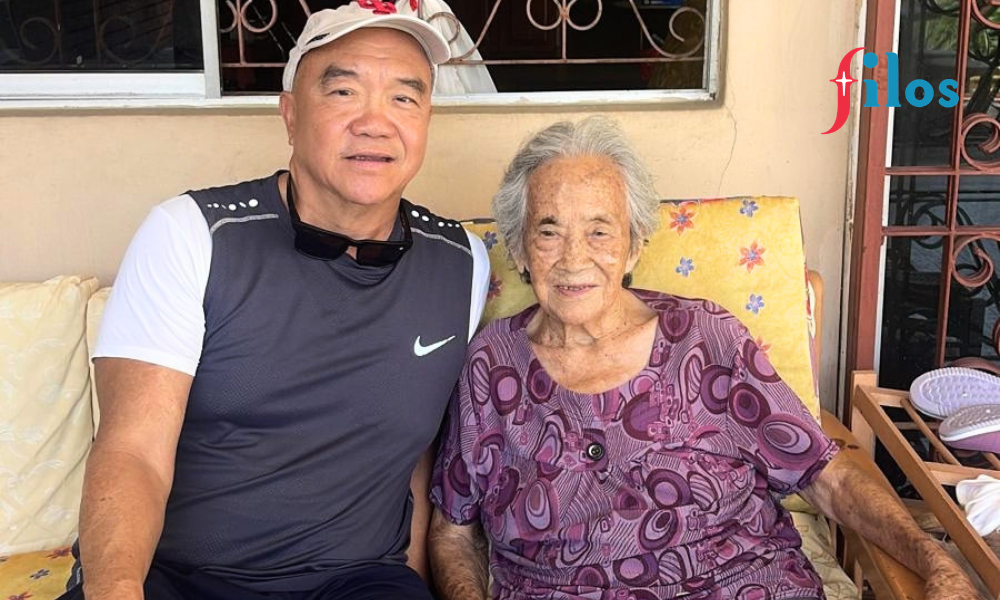
At 96, Tien Ann still likes to do things for herself.
For much of her life, that independence was simply part of who she was. Having grown up in Fujian, China, she learnt to read and write Chinese as a child and, after moving to Singapore, would even help others write letters home. She spent many years working with her hands in her family’s upholstery business and continued keeping busy well into later life; cooking, marketing, gardening and reading the Chinese newspaper.
Even today, some of those familiar habits remain. Every now and then, Tien Ann will cook a pot of porridge large enough for five people, just as she once did when caring for a household. “She’s very pragmatic,” says her youngest son, Jeffrey, 64. “And very independent.” But as Tien Ann’s dementia has progressed, particularly over the past two years, her world has gradually changed.
One thing has become especially clear to her family: home is where she feels most comfortable.
Jeffrey has tried encouraging his mother to participate in activities outside the home, including at Filos’ Active Ageing Centre. But when she is away from familiar surroundings, Tien Ann can become uncomfortable and want to return home. Over time, Jeffrey has learnt not to force it. It does not mean that Tien Ann no longer needs companionship, stimulation or meaningful activity. It simply means that, for her, these things may need to happen differently. Sometimes, meeting someone where they are means exactly that. If Tien Ann is most comfortable at home, then care can come to her.
When caregiving becomes part of everyday life
For Jeffrey and his siblings, caring for their mother is woven into the rhythm of their week.
Jeffrey visits Tien Ann three to four times a week. He often takes her out for lunch at familiar places nearby, while his older brother checks on her in the evenings and helps ensure that her medication is taken. Together with their sister, the siblings coordinate different parts of their mother’s care so that someone is regularly looking out for her.
But caregiving does not begin and end with a visit. As Tien Ann’s memory has changed, Jeffrey has found himself carrying another kind of responsibility: remembering on her behalf.
There are days when she may call him repeatedly, sometimes 20 or 30 times, because she no longer remembers that they have already spoken. When Jeffrey travels, he can explain beforehand that he will be away, only for Tien Ann to forget and later wonder why he has not visited. The family has tried leaving reminders on a whiteboard, but even these do not always work.
At times, a missed visit can leave her feeling as though her children no longer want to see her. These moments have taught Jeffrey that caregiving is not simply about completing tasks. It is also about reassurance, patience and learning how to respond to a reality that may be different from his own. Over time, he has learnt when to explain, when to reassure and when simply to let something pass rather than correct his mother. “I see my mum as my mum,” Jeffrey says. “This is my duty as a son.”
Bringing connection to her
Once a week, Filos Eldersitter Helen visits Tien Ann at home. For someone who prefers not to venture far from familiar surroundings, these visits offer a way for Tien Ann to remain engaged without asking her to leave the place where she feels most at ease.
Helen does not arrive with a fixed idea of what engagement should look like. Instead, she pays attention to the person in front of her; her interests, her history and the things that remain familiar.
Knowing Tien Ann’s love of reading, Helen brings large-print Chinese idioms and proverbs for them to read aloud and discuss. They listen to familiar Hokkien songs together. Remembering that Tien Ann spent much of her life sewing and working with her hands, Helen brings ribbons tied into knots for her to patiently untangle. Sometimes, they look at places from Tien Ann’s past on an iPad, bringing pieces of the wider world into her living room.
And sometimes, care is found in even smaller moments. During one visit, Tien Ann offered Helen a bottle of chrysanthemum tea. A little while later, having forgotten that she had already done so, she encouraged Helen to drink it again. Helen did not correct her. She smiled and took another sip. It was a simple exchange, but one that revealed something dementia had not taken away: Tien Ann was still a host, making sure the person visiting her was cared for.
Her memory may be changing, but she is still Tien Ann.
Although she may no longer feel comfortable going out into the community in the way she once did, she does not have to be disconnected from it. Through home-based support like the Eldersitter Programme, companionship and meaningful engagement can meet seniors in a place that feels safe and familiar to them.
The caregiver needs a life, too
For Jeffrey, learning how to care for his mother has also meant learning how to care for himself. “As caregivers, we also need to have our own lives,” he says. “I will go nuts if I don’t have my own life.” He continues to exercise, spend time with his own family and make room for the things that sustain him. It does not make him any less committed to his mother. Rather, it is part of finding a way to keep showing up for her as her needs change.
Jeffrey does not do it alone. His siblings share the responsibility, while having a helper at home has also eased some of the family’s worry about Tien Ann being by herself. Their experience is a reminder that caregiving is rarely one single act. It is the lunch outings, medication checks and phone calls. It is rearranging schedules, repeating reassurance and making decisions about when to step in and when to give someone space.
Often, it is simply being there, again and again.
Caring, Together
Tien Ann and Jeffrey’s experience is one of the stories behind 'Caring, Together', Filos’ 2026 Community Mental Health fundraising campaign.
Not everyone experiences ageing or dementia in the same way. While some seniors enjoy joining activities and meeting others in the community, others, like Tien Ann, may feel most secure within the familiarity of home.
Through Filos’ Care Connect services, including the Eldersitter Programme, we seek to meet individuals and caregivers according to their changing needs; creating opportunities for meaningful engagement, companionship and support, including for those who may be more comfortable receiving it at home. Because meeting someone where they are is not about expecting them to fit into our idea of care. It is about finding a way for care to reach them.
Help us continue walking alongside individuals like Tien Ann and caregivers like Jeffrey. Give to Caring, Together today.